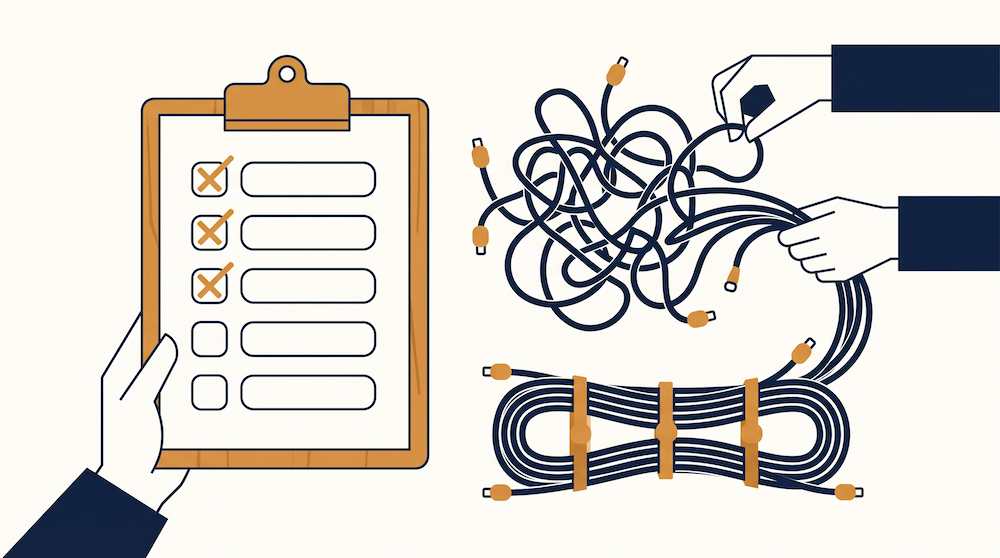
Most companies don't have a HubSpot problem. They have a HubSpot setup problem. The tool works fine. What's usually broken is everything feeding into it and everything built on top of it.
Here's what we check first when we take over a HubSpot instance, and what a setup that actually works looks like once it's fixed.
Start with the data, not the tool
Before anything else, run every contact and account record through a third-party verification tool. Importing bad data into a clean system just gives you a dirty system with better software. This step gets skipped constantly because it feels like busywork before the "real" setup begins. It is the real setup. Everything downstream, routing, scoring, reporting, inherits whatever mess you import on day one.
Your deal dashboard should mirror how you actually sell
A lot of HubSpot instances have a deal pipeline that was set up once, years ago, and never touched again. The stages should match your real sales process: qualification, meeting booked, SOW, and so on, not a generic template. And the stages need to be weighted correctly for revenue forecasting, or your pipeline number is just a guess dressed up as a report.
Route inbound leads to a sequence and a rep, not an inbox
Form fills should route automatically to the right sequence and the right rep based on real criteria, not just forward as an email notification for someone to act on manually. If your inbound handling still depends on someone checking a shared inbox and deciding what to do, that's a routing gap, not a rep problem.
Enrich contacts continuously, not once at import
Use HubSpot's native enrichment or a Clay workflow to keep contact and account data current, and to disqualify contacts by territory as conditions change. Enrichment isn't a one-time cleanup task. Territories shift, people change roles, companies get acquired. A system that only enriches on import is already stale by month two.
Surface the fields reps actually need
Title, products owned, renewal dates, decision-maker role, whatever matters for your sales motion, should be visible on the contact record itself. If reps are clicking through five tabs to find information that should be on the main page, that's a setup cost you're paying every single call.
Automate the closed-loss follow-up
When a deal goes to closed-lost, set an automatic follow-up task for somewhere between 45 days and four months out. Timing and circumstances change. A deal that wasn't right six months ago might be right now, but only if someone's system remembers to check.
Know when you need active lists
If your Sales Hub tier doesn't let managers enroll contacts into cadences on behalf of reps, active lists are the workaround. Worth knowing this limitation exists before you're stuck mid-campaign trying to figure out why a manager can't just add contacts to a sequence.
None of this requires new software. It requires someone who's set up enough HubSpot instances to know which of these seven things is actually missing in yours, and to fix it before it costs you a quarter of bad reporting or a pipeline full of contacts nobody can act on.